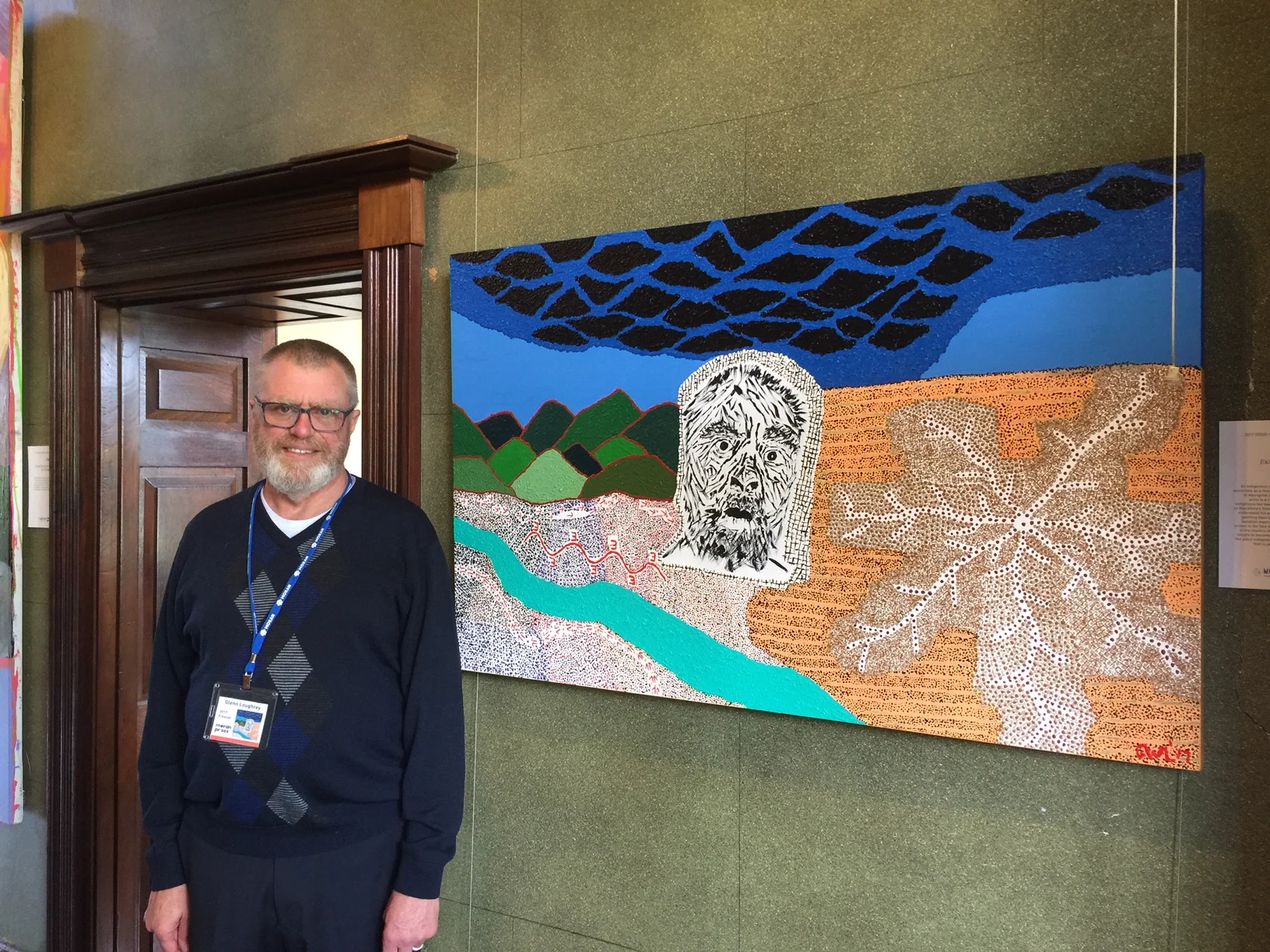
About Glenn Loughrey.
We're not here to follow trends—we're here to build something timeless. With a blend of creativity, strategy, and heart, we help ideas come to life.
Introduction
Glenn Loughrey is a Wiradjuri artist, writer, poet, and cultural thinker whose work explores the living relationship between Country, story, spirit, and community. Through painting, poetry, installation, and spoken word, he engages deeply with Aboriginal philosophies of relationality, memory, and the enduring presence of the Everywhen.
Grounded in sovereign Country and shaped by decades of creative, cultural, and community practice, Glenn’s work speaks to truth-telling, responsibility, healing, and connection. His immersive visual language — built through layered paint, intuitive mark-making, and rhythmic patterning — invites audiences into spaces of reflection, encounter, and shared presence.
Alongside his artistic practice, Glenn works as an author, lecturer, consultant, and educator, contributing to conversations around Aboriginal spirituality, justice, creativity, and cultural engagement. His work has been exhibited widely and continues to create pathways for dialogue between art, community, and Country.
He is also an Anglican Priest, as well as an Honorary Associate Professor at the Crawford School of Public Policy, Australian National University, where his work contributes to conversations around Indigenous knowledge, culture, and public policy.
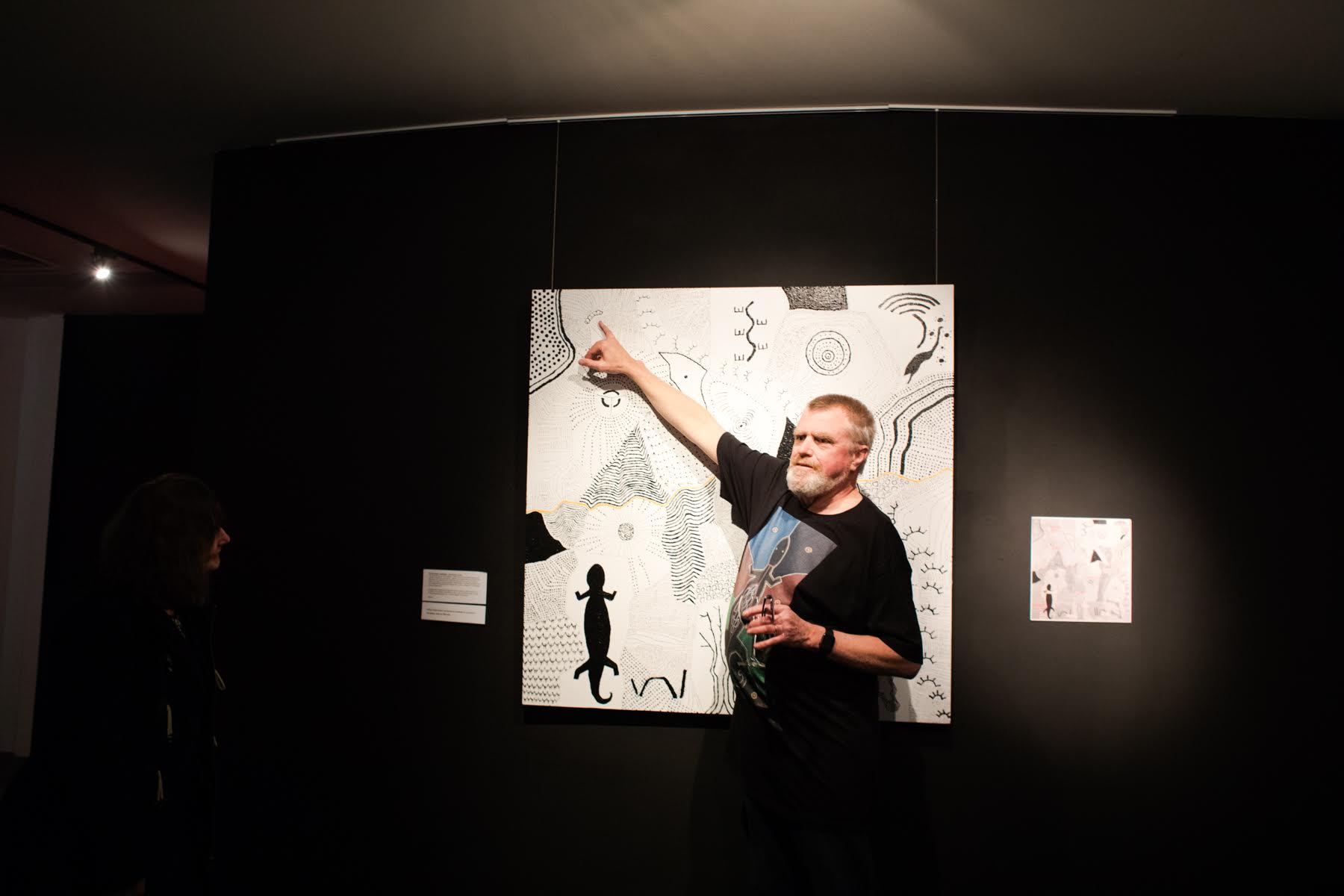
Driven by A History….
Glenn is an Aboriginal artist whose practice is grounded in the Six Dimensions of Country — a living cultural framework in which land, spirit, ancestry, story, time, and community exist in dynamic and enduring relationship.
Working across installation and painting, Glenn creates within the Everywhen, where past, present, and future remain layered and active. His work emerges through attentive listening to place and through an ongoing dialogue with ancestral presence. It is relational rather than symbolic, shaped by responsibility as much as expression.
Through this framework, Glenn engages contemporary and political realities with clarity and resolve. His work addresses sovereignty, institutional power, memory, and the continuing impacts of colonisation — not as commentary, but as lived experience embedded in Country. By bringing Aboriginal philosophies into conversation with public, sacred, and architectural spaces, he repositions how those spaces are understood and inhabited.
Light, repetition, geometry, and spatial rhythm form a visual language of continuity and assertion. These elements operate as cultural structures — holding story, mapping connection, and affirming presence.