Glenn Loughrey has written several non-fiction books, poetry, and contributed to children’s books.
Writings & Books.
Book Overview
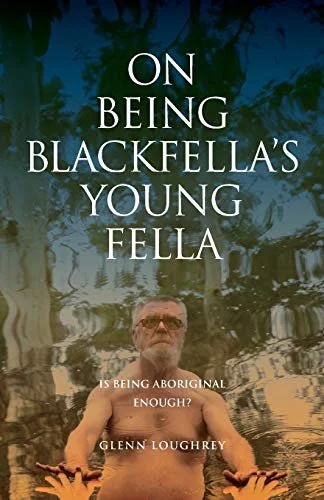
On Being Blackfella’s Young Fella: Is Being Aboriginal Enough? (2020)
“I discovered no matter how good I was, I was never good enough.'“
This is a story of identity: how one man experienced exclusion and a sense of unworthiness in Australian Society. It is the story of growing up - blackfella's youngfella - and the struggle to assimilate into the dominant, white European society.
But the struggle, the search and the frustration leads to his uncovering a core question: is being Aboriginal enough?
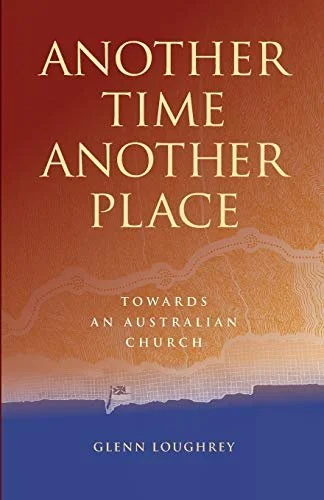
Another Time, Another Place: Towards an Australian Church (2019)
In 1981, the name of the Church of England in Australia was officially changed to the Anglican Church of Australia. There was a growing awareness of independence and a sense of identity less reliant on formal, historic ties with England.
Developing that awareness, this book acknowledges that the roots of Anglicanism in Australia were English, transported here through invasion and dispossession, and asks how the Anglican Church in Australia can replant itself in authentic Australian soil.
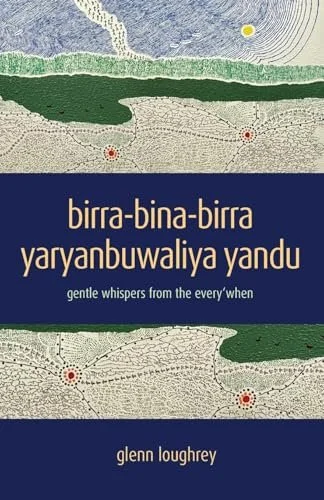
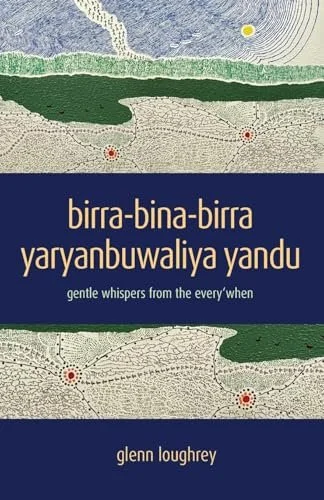
birra-bina-birra yaryanbuwaliya yandu: Gentle Whispers from the Every'when
‘Birra-Bina-Birra Yaryanbuwaliya Yandu: Gentle Whispers from the Every'when’ is a 2025 book of poetry and reflection, published by Coventry Press.
It explores Aboriginal spirituality, identity, and connection to country, offering a, "gentle whisper" that challenges readers to understand, "other" ways of being.
The title roughly translates from a "language" perspective as a journey of hearing and voice.
Book review:
‘On Being Blackfella’s Young Fella’ by Duncan Reid
Glenn Loughrey, On Being Blackfella’s Young Fella: Is Being Aboriginal Enough? (Melbourne: Coventry, 2020).
ISBN 9780648804444. RRP $23.50
This is a disturbing book, for a number of reasons. It starts with an acknowledgement of country that goes beyond the conventional words you’ll hear at any citizenship ceremony: “I also acknowledge that this land was stolen and those who stole it have no intentions of giving in back any time soon” (p.5). It ends with the seemingly uncompromising statement, “We do not need Christianity… we do not need a saviour or an intervening god’ (151) – the ‘we’ meaning Aboriginal people: “We do not need salvation… We are Aboriginal, that is all we need to be” (p.155). A strange thing, you might think, to hear from an Anglican priest.
In between the beginning and the end is an extended account of the author’s growing up in a farming family totally in tune with the land they were working, yet excluded from borrowing to buy the farm because of the exclusion of Aboriginal people from civic life in Australia prior to 1967. As if all this were not disturbing enough, there is the added discomfort about how this book came to be written: a public dialogue with a well-known Iona hymn writer, ostensibly about connections between Aboriginal and Celtic spiritualities, but hijacked, the author felt, by a total focus on the latter of these spiritualities as Celtic Christianity instead of Celtic spirituality. Even well-meaning white fellas, is seems, can get caught up in the domination game, perhaps even without realising we’re doing it. The author wakes at night thinking “that perhaps, just perhaps, that there is no such category as Aboriginal spirituality” (p.21).
And yet this is not an angry book. Rather, it’s a book that grapples deeply, painfully and honestly, with the experience of being pulled between two aspects of personal identity, living immersed in and being fully part of two different cultures, whose protocols and priorities, thought forms and even languages for encapsulating reality are so differently aligned. “The question that troubles me most personally is why I find myself in this place where I have to hold in tension the two ways of seeing. It would be so much easier to be one or the other” (p.153).
Above all, this book is about an Aboriginality that, in the words of another local Aboriginal Anglican priest, “is most often preserved in the form of a memory and a deep-down sorrow pertaining to what has been lost or stolen – land, kin, dreaming”. What we hear in this book is something of that deep-down sorrow, a sorrow that sits in unresolved tension with the equally deep sense of calling to follow Jesus, and to ministry in his name: “Becoming Anglican was one of the whitest things a blackfella could do,’ Loughrey writes. “Being an Anglican priest was and is the ultimate sign of assimilation…” (p.25). Loughrey has written elsewhere about his faith and his sense of church, and how these need to find authentic Australian expressions. His sincerity about these things is not to be doubted.
This book is about his Aboriginality, and he has a great deal to say about this, much more than can be summarised in a short review. The central point he makes is that the Australian indigenous worldview is a “philosophy of enough, enough not as a deficit but as sufficient” (p.97). This is a message we need to hear as Christians and as Australians, and indeed, as a human being in the twenty-first century. It will demand some sacrifices from us, intellectual sacrifices of long cherished assumptions, about the world, ourselves and our faith. Or at least, about how our faith is expressed. The one who stands at the centre of our faith is still there, but he may just surprise us by starting to look a bit more Aboriginal.